
Freight Forwarding Job Costing: A Practical Guide to Protecting Margin
BlueLogis Consulting ·
A job can look profitable at quotation stage and still lose money when supplier costs, amendments or unbilled charges are missed.
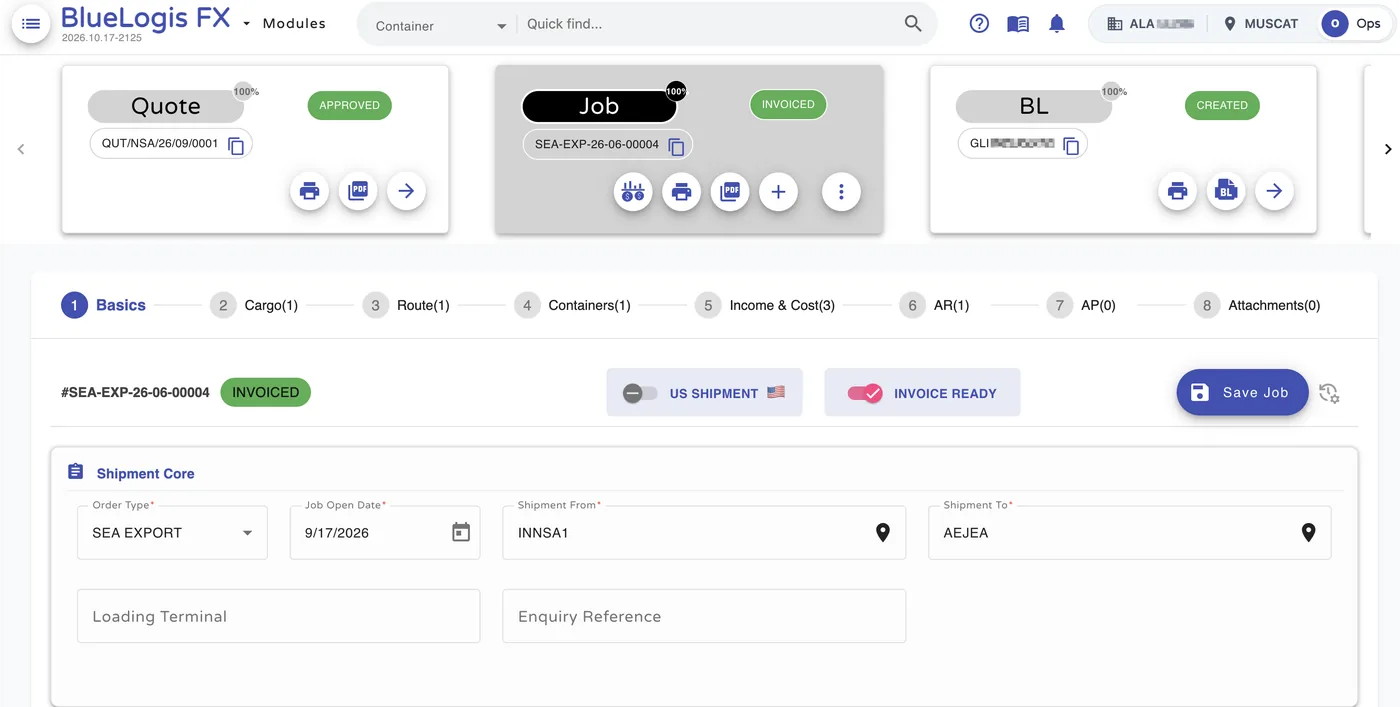
Freight forwarding profitability is determined at job level, not only when month-end accounts are closed. Job costing brings expected revenue, expected cost, actual supplier charges and customer billing together against one shipment record, giving operations and finance the same view of a job.
Start with a complete quotation
Record the commercial assumptions that affect margin: shipment mode, origin and destination, container or cargo details, carrier cost, local charges, validity, currency, exchange-rate assumption and any service not yet priced. If a charge is pending, mark it as pending rather than treating it as zero.
Carry the estimate into the job
When the job is created, retain the accepted commercial lines and add shipment-specific information such as carrier, bill of lading, dates, containers and service partners. Assign an owner to every missing cost, including destination handling, agency disbursements, storage risk and currency adjustments.
Keep expected cost, accrual and supplier bill separate
- Expected cost: the amount used to assess margin at quotation or booking stage.
- Accrual: an estimate for work completed but not yet billed by the supplier.
- Supplier bill: the actual approved charge for payment.
Keeping these separate makes it clear whether a margin change came from the original estimate, an unreceived bill or a supplier variance.
Review before customer invoicing
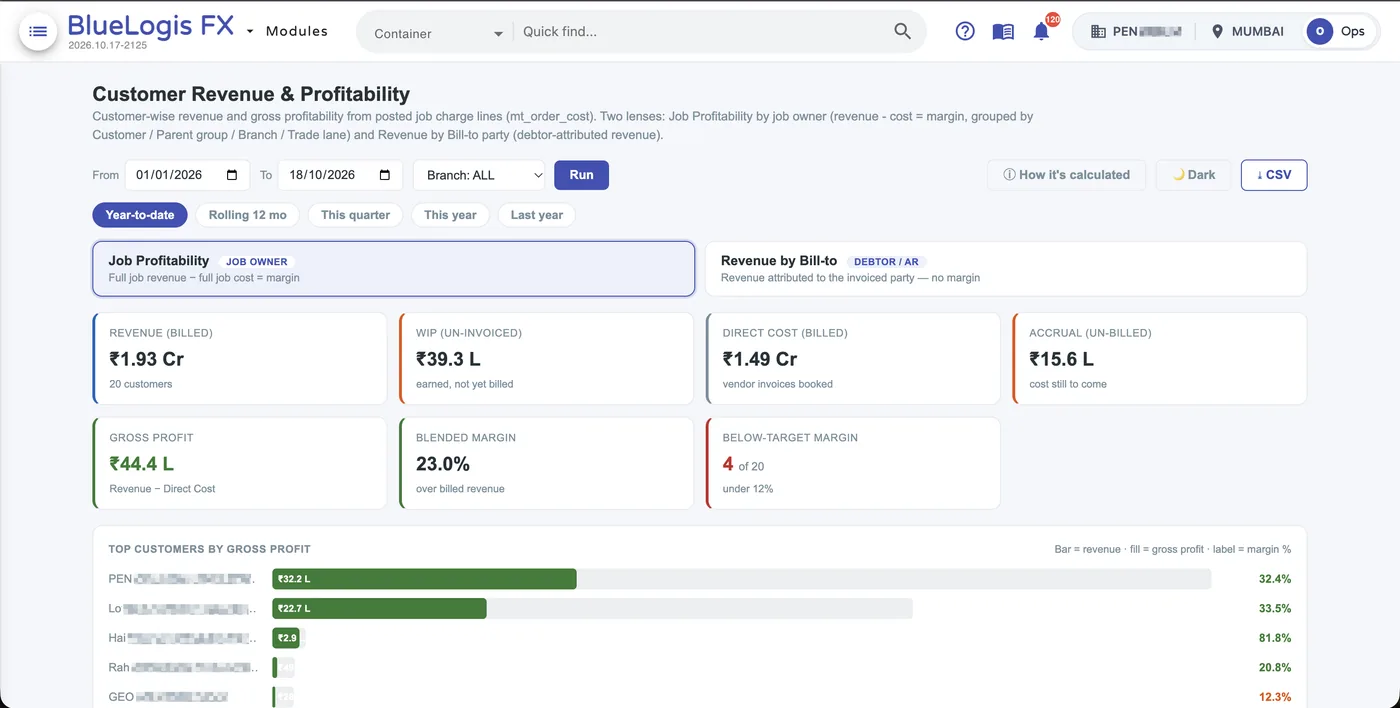
Confirm that every completed service is represented, every supplier cost is recorded or accrued, every customer charge is approved and each exception has an owner. For higher-value or below-target jobs, compare quoted margin with final margin and use recurring variances to improve the next quote.
Job-costing checklist
- Known revenue and cost lines are included in the quote.
- Pending costs are visible and assigned.
- Operational documents, revenue and costs share a job reference.
- Accruals are reviewed before margin is reported.
- Customer invoices are checked against the final scope.
- Material margin variances are reviewed.
Related guides
- NVOCC vs freight forwarder: what software do you need?
- Freight forwarding software in India: GST, e-invoicing and ICEGATE checklist
- Choosing freight forwarding software in Oman and the GCC: VAT, ZATCA and multi-currency
Discuss your workflow with BlueLogis. Send an enquiry.
Products: BlueLogis FX (freight forwarding) · BlueLogis AX (NVOCC agency) · BlueLogis NX (NVOCC principal).